Permanently applying a company logo to a textile is not just an aesthetic choice — it affects the product’s durability, visual impact, lead time and, of course, cost. Choosing the wrong technique can mean that the logo starts to crack after the first few washes, or that a hundred units cost twice what they should. In this article we walk through the four most common techniques and explain when each one is the right call.
Screen printing is the classic choice for large runs. If you are ordering more than 50 identical shirts for a company event, screen printing is almost always the cheapest and most durable solution. Ink is pressed through a screen directly onto the fabric, and one screen is made for each colour in the logo — which means set-up costs are high for small runs, but on larger runs the per-piece price drops quickly. Screen printing washes well and produces bright, vivid colours.
DTF printing (Direct-to-Film) is a modern technique that has captured the market in recent years, especially for small and multi-coloured orders. The logo is printed first onto a special film and then transferred to the textile with a heat press. Because no separate screens are required, the set-up cost is low — and even photographic, highly detailed images reproduce beautifully. DTF works on almost any fabric, including stretch and moisture-wicking technical materials. Wash durability is good, though not quite on par with screen printing on very large designs.
DTG printing (Direct-to-Garment) is similar to printing directly onto the shirt: ink is sprayed onto cotton fabric with a specialised printer. The result is soft and sits closely against the fabric, which is ideal for T-shirts where you want a natural hand-feel. DTG is the best choice for single pieces and very small runs when the logo is photographically detailed. It works excellently on cotton but not on polyester.
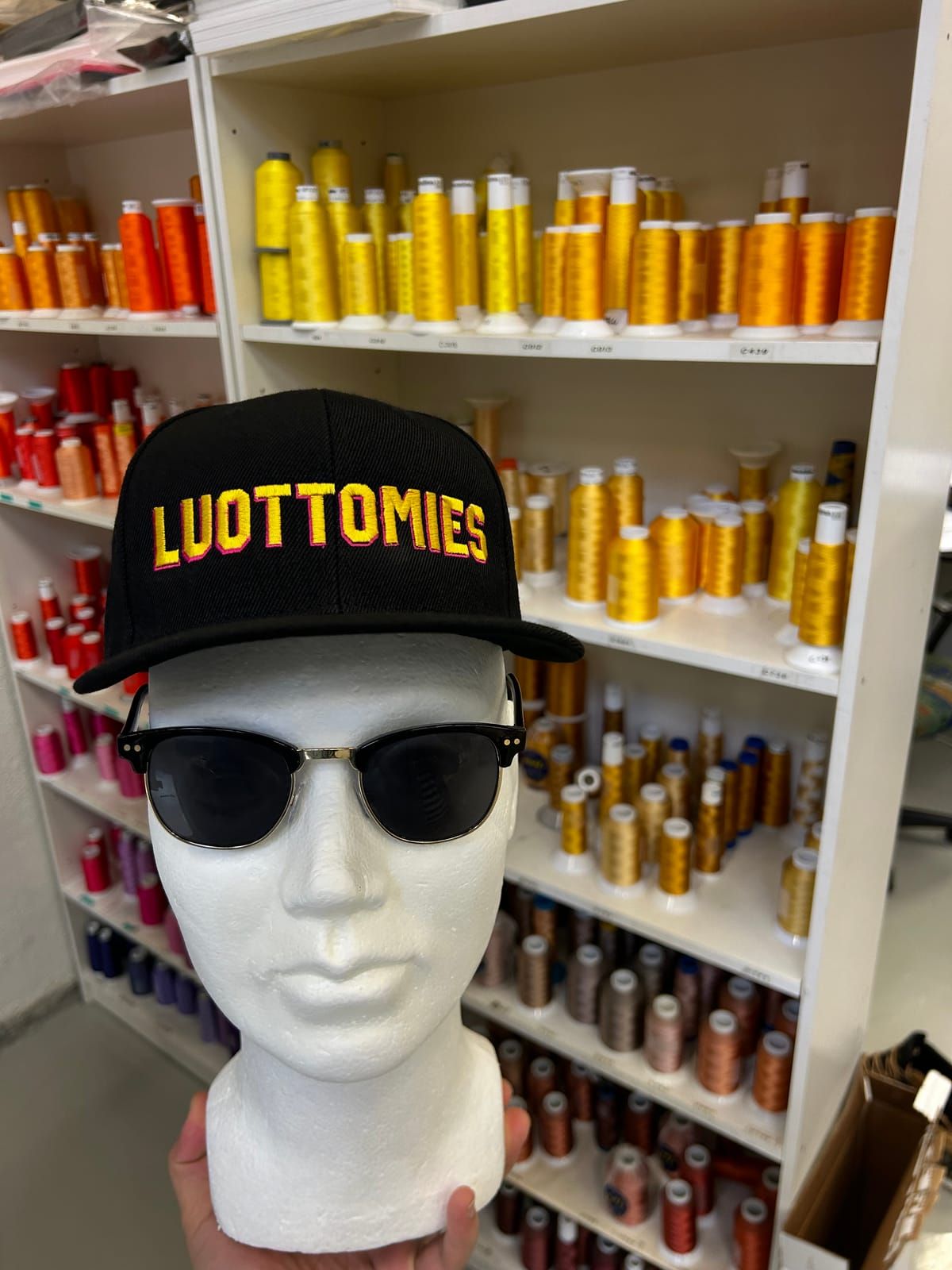
Embroidery is the most durable and most premium-feeling option. Instead of the colour sitting on top of the fabric, in embroidery the thread passes through the fabric — which makes it virtually indestructible. An embroidered company logo survives 300+ machine washes and looks almost identical five years later. Embroidery is the default choice for corporate workwear, representative apparel, caps and softshell jackets. It also suits small runs (from 10 pieces) because the set-up cost is reasonable.
The practical choice usually goes as follows: large event runs and promotional T-shirts → screen printing. Small runs or a multi-coloured/photographic logo → DTF. A single cotton shirt or a very detailed image → DTG. Corporate workwear, representative apparel, caps and softshells → embroidery. A mix (for example, 30 embroidered work jackets + 200 screen-printed event shirts) is a perfectly normal and sensible combination.
Brandix performs all four of these techniques in-house in Finland. This means we can recommend the right method for your product, quantity and budget — we are not trying to force everything onto a single technique just because it is the only one we know. Send us your logo and describe the use case, and we will recommend the best solution.